
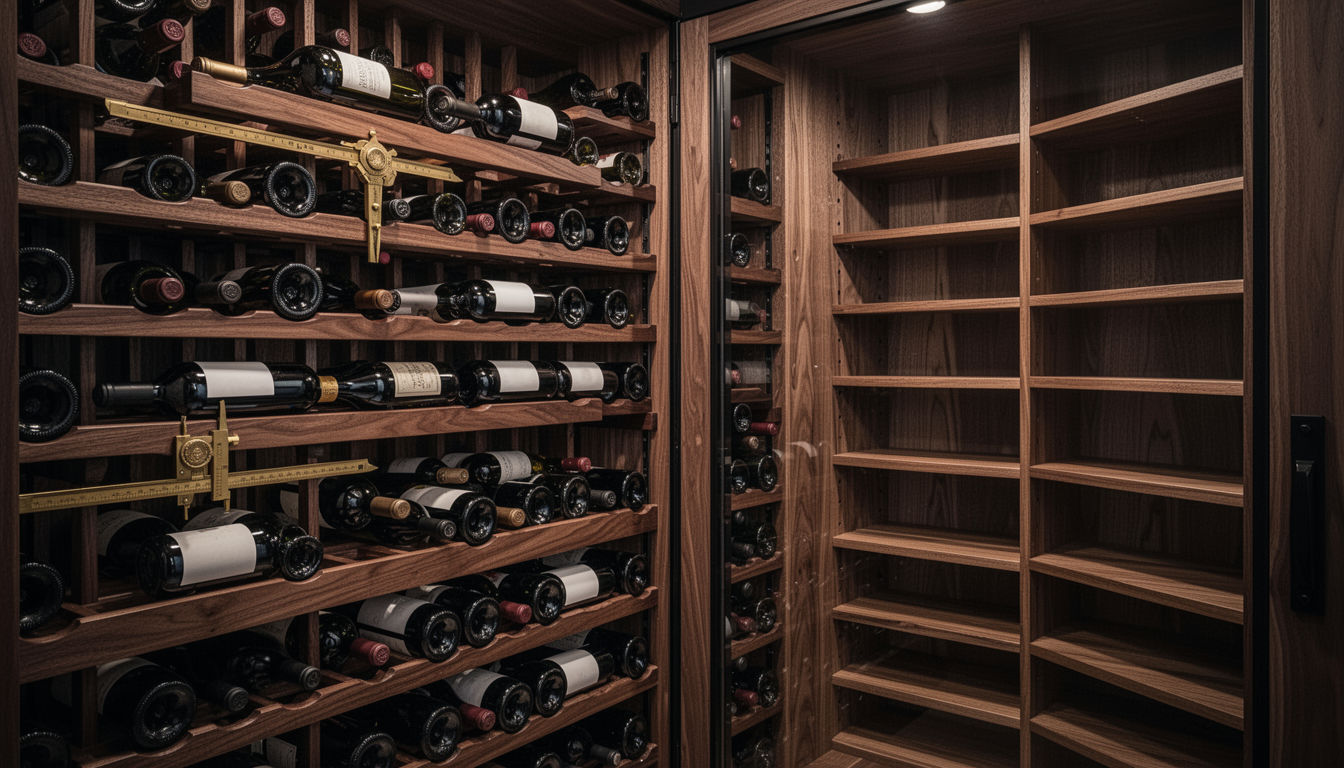
Wine storage cost is not simply a monthly figure beside a locker size. For a serious collector in Boston or elsewhere in New England, the useful comparison is what each option protects, how easily you can access it, and which services appear as separate charges. A careful quote review helps you avoid paying for space that does not support the condition, provenance, or day-to-day management your collection requires.
Start with the storage model, not the advertised price
Wine storage prices usually reflect the amount of space you reserve and the way that space is managed. A private locker, shared rack, case storage arrangement, or larger commercial account may each use a different pricing structure. Ask whether the quote is based on bottle count, cases, linear shelf space, a dedicated room, or a minimum allocation.
Then clarify access. Some facilities are designed for scheduled retrieval and professional handling, while others operate more like self-service storage. If you expect to add bottles, prepare a mixed case, or retrieve a specific vintage before a dinner, the access process is part of the value. A lower wine storage rental rate may be less useful if every visit creates extra handling, appointment, or delivery costs.
Separate the core fee from the services around it
Request an itemized quote rather than comparing one total against another. Storage is only one line. Transport, receiving, inventory work, picking, packing, delivery, insurance coordination, appraisal, and collection sales assistance may be included, optional, or billed separately.
- Storage: the space and controlled environment assigned to your bottles.
- Handling: receiving shipments, moving cases, picking bottles, and preparing orders.
- Transport: pickup from your home, delivery to an event, or a move between facilities.
- Collection services: inventory updates, documentation, appraisal support, or sale preparation.
This distinction matters when a collection is moving from a home cellar into a vault. A quote that looks higher at first may cover more of the chain of custody, while a basic rental may leave you coordinating several vendors. Neither structure is automatically best, but the comparison should be made on the same scope of work.
Evaluate what protects condition and provenance
Ask practical questions about climate management, monitoring, security procedures, receiving records, and access controls. Do not assume that a generic wine storage unit provides the same safeguards as a purpose-built professional facility, and do not assume a professional claim means every protection is included in the base fee. The provider should explain its actual process and identify what is covered by the agreement.
For valuable bottles, documentation deserves equal attention. Confirm how bottles are identified when they arrive, how movements are recorded, and how discrepancies are handled. A dependable record supports insurance conversations, estate planning, future appraisal, and any decision to sell wine online later. It also gives you confidence that the bottle you request is the bottle you receive.
Review professional wine storage as a service category, not just a room rental. The right question is whether the facility gives your collection a consistent home and a clear operating process as it grows.
Compare home storage with a vault honestly
A home cellar can appear inexpensive because the monthly payment is easy to overlook after construction. Include cooling equipment, electricity, maintenance, backup planning, shelving, security, insurance changes, and the value of the space itself. In a New England home, seasonal swings and an unexpected equipment failure can also create risks that are difficult to price in advance.
Professional wine storage may be the better fit when your collection has outgrown available space, when you travel frequently, or when bottles arrive from several sources. It may also simplify a relocation, but transport and storage should still be evaluated as separate decisions. For a move into or out of Massachusetts, ask for a written handoff plan and use a temperature-controlled wine transport partner when the collection needs specialized logistics.
Use a quote checklist before you commit
Before choosing among wine storage services, ask each provider to answer the same questions in writing. This creates a useful comparison even when the facilities use different pricing models.
- What exactly is included in the recurring storage fee?
- How are receiving, retrieval, delivery, and special handling charged?
- What space model fits the current collection and likely growth?
- How are bottles documented from arrival through release?
- What access, notice, and pickup expectations apply?
- Which insurance responsibilities remain with the collector?
Keep the quotes with your inventory records and revisit them as your buying pattern changes. A collector who receives one annual shipment has different needs from a collector who buys regularly, hosts events, or is preparing an estate. The most useful wine storage cost is the one that matches the work your collection actually requires.
Choose clarity over the lowest number
Once you know the full scope, compare wine storage prices by total responsibility, not by the headline rate. A transparent provider will help you distinguish storage from transport, handling, and collection management, then explain which combination fits your bottles and routine.
For a tailored review, compare the available wine storage pricing with the collection support you expect, and explore wine collection management if inventory visibility is part of the decision. The goal is not to find an arbitrary lowest price. It is to place a valuable collection in a system that protects condition, preserves provenance, and gives you peace of mind.