
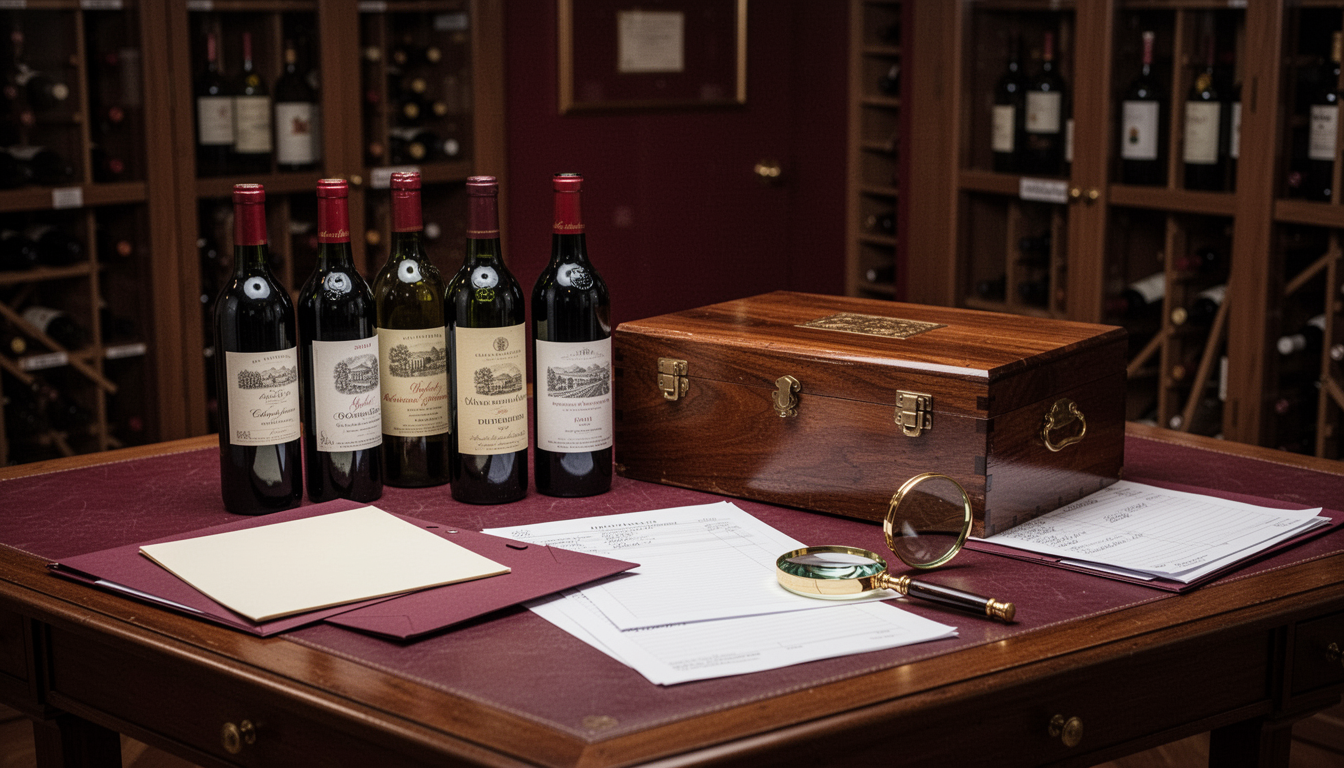
Selling a serious wine collection is not the same as clearing a closet. Each bottle has a condition, provenance, market position, and practical path to a buyer. A wine broker can bring those pieces together when selling independently would leave you managing research, outreach, negotiation, paperwork, and handoffs on your own.
For collectors in Boston, Massachusetts, and across New England, the right decision starts with the collection rather than the sales channel. A broker may be useful for a focused group of rare bottles, a full cellar transition, an estate process, or holdings that need discreet buyer matching. The goal is not simply to move bottles. It is to protect context and make the transaction orderly.
What a wine broker does for a collector
A wine broker typically reviews what you own, identifies bottles that may fit different buyer profiles, helps organize supporting records, and coordinates the commercial conversation. Depending on the arrangement, the broker may introduce buyers, structure offers, communicate terms, and guide the next steps toward completion.
A broker is not automatically an appraiser, auction house, retailer, or transporter. An appraiser focuses on an opinion of value, while an auction house operates within its own sale format. A retailer buys or sells through a retail model, and a transporter handles physical movement. Ask exactly which services are included before you rely on a broker’s recommendation.
When brokerage is preferable to selling direct
Independent selling can work when you have a small number of straightforward bottles, clear records, and time to handle every inquiry. A plan to sell wine collection holdings independently becomes more demanding when the inventory is large, geographically dispersed, highly specialized, or connected to a relocation, estate, insurance review, or change in ownership.
Wine consignment may be another option, but the arrangement deserves the same careful review as a brokerage agreement. Ask who controls the bottles, who sets or recommends pricing, when ownership changes, how offers are handled, and how unsold inventory is returned. Collectors who sell wine online should also confirm the platform’s terms, buyer verification process, payment procedures, shipping responsibilities, and applicable rules before listing valuable bottles.
- You want one point of contact instead of managing many prospective buyers.
- You need help separating bottles by condition, provenance, market, or urgency.
- You prefer a discreet process for valuable or recognizable holdings.
- You need transaction coordination before a collection moves into storage or transport.
Be cautious with anyone who promises a guaranteed price, buyer, return, or timeline. Fees, commissions, licensing, taxes, alcohol regulations, and insurance terms can vary by arrangement and jurisdiction. Treat a broker’s proposal as a service agreement to review carefully, not as a universal answer.
Prepare the collection before the first conversation
Good records make a broker’s review more useful and help preserve provenance through a sale. Start with a current inventory that includes producer, cuvée, vintage, format, quantity, purchase source, purchase date when known, and storage history. Note fill levels, label or capsule condition, case condition, and any visible concerns.
Gather invoices, receipts, import documents, cellar records, appraisal materials, photographs, and ownership documentation. If bottles have been stored in more than one place, record those changes. A clear wine management system can make this preparation far easier and reduce avoidable questions.
Questions to ask before signing
Ask how the broker evaluates a collection, how potential buyers are selected, and whether the broker represents you, the buyer, or both parties in a transaction. Request a written explanation of fees, expenses, payment timing, custody, insurance responsibilities, cancellation terms, and what happens if only part of the collection sells.
Also ask where bottles remain while offers are considered. If the collection needs a stable interim home, secure wine storage can help separate the sales decision from a rushed move. For a Boston-area collector, reviewing storage and service pricing in advance can clarify the cost of maintaining control while the transaction develops.
Plan the handoff as carefully as the sale
A completed agreement is not the end of the risk. Confirm who verifies the bottle count, documents condition, releases inventory, and arranges delivery. For a relocation or estate transition, use a specialist that can coordinate collection transport and maintain a documented chain of custody. Temperature, timing, packaging, and state or international requirements should be addressed before anything leaves storage.
A practical decision checklist
Use a wine broker when the collection’s complexity, value, privacy, or logistics justify a specialist and you want coordinated buyer outreach. Selling direct may be reasonable when the inventory is small, records are strong, and you are prepared to manage inquiries, verification, negotiation, compliance questions, and delivery.
Before choosing either path, define what success means: a careful partial sale, an orderly full transition, discreet handling, or a documented transfer into long-term custody. The best process protects more than the bottle price. It preserves provenance, condition, and your peace of mind throughout the transaction.