
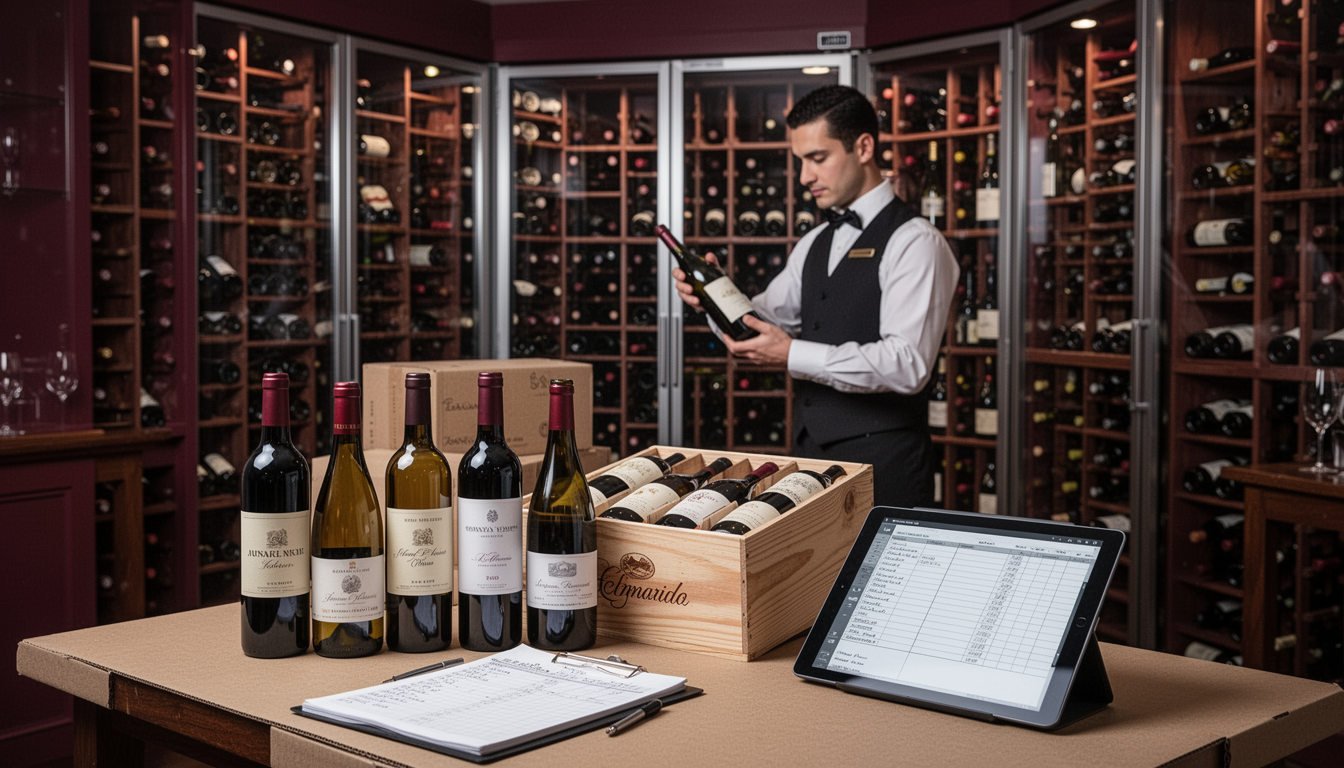
Wine fulfillment is more than placing cases on a truck. For a Boston restaurant, importer, or trade buyer, it is the operating system that connects receiving, storage, inventory control, order preparation, and delivery. When those steps live in separate spreadsheets, rooms, and vendor relationships, small gaps can become missed allocations, duplicate orders, damaged bottles, or a service team searching for stock during a busy dinner.
A stronger model treats every bottle as part of one controlled flow. The goal is not simply faster shipping. It is a clear record of what arrived, where it is stored, who requested it, how it was handled, and when it should reach the restaurant or customer.
What wine fulfillment should include
A useful fulfillment program begins before an order is picked. It should account for receiving, condition checks, cataloging, location assignment, order verification, packing, dispatch, and confirmation at delivery. The exact responsibilities vary by provider, so a trade buyer should ask which steps are performed directly and which remain with the winery, importer, carrier, or restaurant.
This distinction matters because “shipping” describes only one part of the journey. A fulfillment partner may help coordinate storage and dispatch, but your team still needs agreed procedures for purchase orders, allocations, substitutions, returns, and urgent requests. Clear ownership protects both efficiency and provenance.
Why inventory management is the foundation
Wine inventory management gives a restaurant or importer a dependable view of its holdings. At minimum, the record should identify producer, vintage, format, quantity, location, ownership or allocation status, and movement history. For valuable or limited bottles, notes about condition and provenance can be just as important as the count.
Wine inventory software can make that record easier to search and maintain, but software is not a substitute for disciplined receiving and updates. Ask how new stock enters the system, how picks are confirmed, how discrepancies are escalated, and whether your staff can see the information they need without creating parallel records. One accurate inventory record is more valuable than several attractive tools that disagree.
For a Boston-area operation, this approach also reduces the pressure on a small back-of-house cellar. A restaurant can plan replenishment from a controlled offsite location rather than treating every case as an emergency purchase or storing more product than the premises can safely accommodate. The same principle helps importers organize incoming stock before it is committed to a customer or route.
How commercial storage supports the workflow
Commercial wine storage should be evaluated as part of fulfillment, not as an isolated square-footage decision. Review how bottles are received, labeled, located, accessed, and released. Ask whether the facility can support your order cadence, how exceptions are documented, and what communication you receive when a count or condition does not match the expected record.
If you are considering bonded wine storage, treat that phrase as a question to verify rather than an assumption. Ask what bonded services mean in the specific arrangement, which party holds responsibility for documentation, and whether the storage model fits your business and regulatory needs. Written answers are preferable to broad marketing language.
Secure storage can also make the chain of custody easier to explain. A consistent handoff from receiving to storage to picking gives your team a clearer basis for reconciling inventory, investigating a discrepancy, and protecting the story attached to a rare bottle.
Questions to ask before choosing a partner
- How are cases and individual bottles received, counted, labeled, and assigned a location?
- How quickly are inventory changes reflected after a receipt, pick, transfer, or return?
- Who verifies an order before it leaves storage, and how are substitutions approved?
- What delivery windows or appointment practices can the operation realistically support?
- How are access, condition concerns, exceptions, and claims documented?
- Which steps are handled by the storage provider, and which require a transport specialist?
It is also worth asking how the provider coordinates with your existing systems. If a restaurant uses a purchasing platform, point-of-sale record, or cellar list, define which record is authoritative and how often it is reconciled. A practical workflow should reduce duplicate entry rather than add another disconnected dashboard.
When a New England business has outgrown onsite storage
The tipping point is rarely a specific bottle count. It may be a restaurant losing usable kitchen or dining-room space, an importer receiving more allocations than its current room can organize, or a buyer spending too much time tracing cases between locations. In each situation, the operational question is the same: can the current setup provide accurate visibility and dependable access without exposing the collection to unnecessary handling?
For businesses in Boston, Massachusetts, and across New England, a review of wine management and secure wine storage can clarify whether offsite support is appropriate. When orders need to move between a vault and a trade account, review the available wine shipping and delivery process as part of the same conversation. For transport-specific requirements, a specialist such as National Wine Transport may be the right partner to evaluate.
A more controlled next step
Good wine fulfillment does not promise that every delay or discrepancy disappears. It creates a repeatable process that makes the collection easier to see, handle, reconcile, and move. For a restaurant, importer, or trade buyer near Boston, the best next step is to map one typical order from receipt through final placement, then identify where storage, inventory management, and delivery can be joined without sacrificing control.