
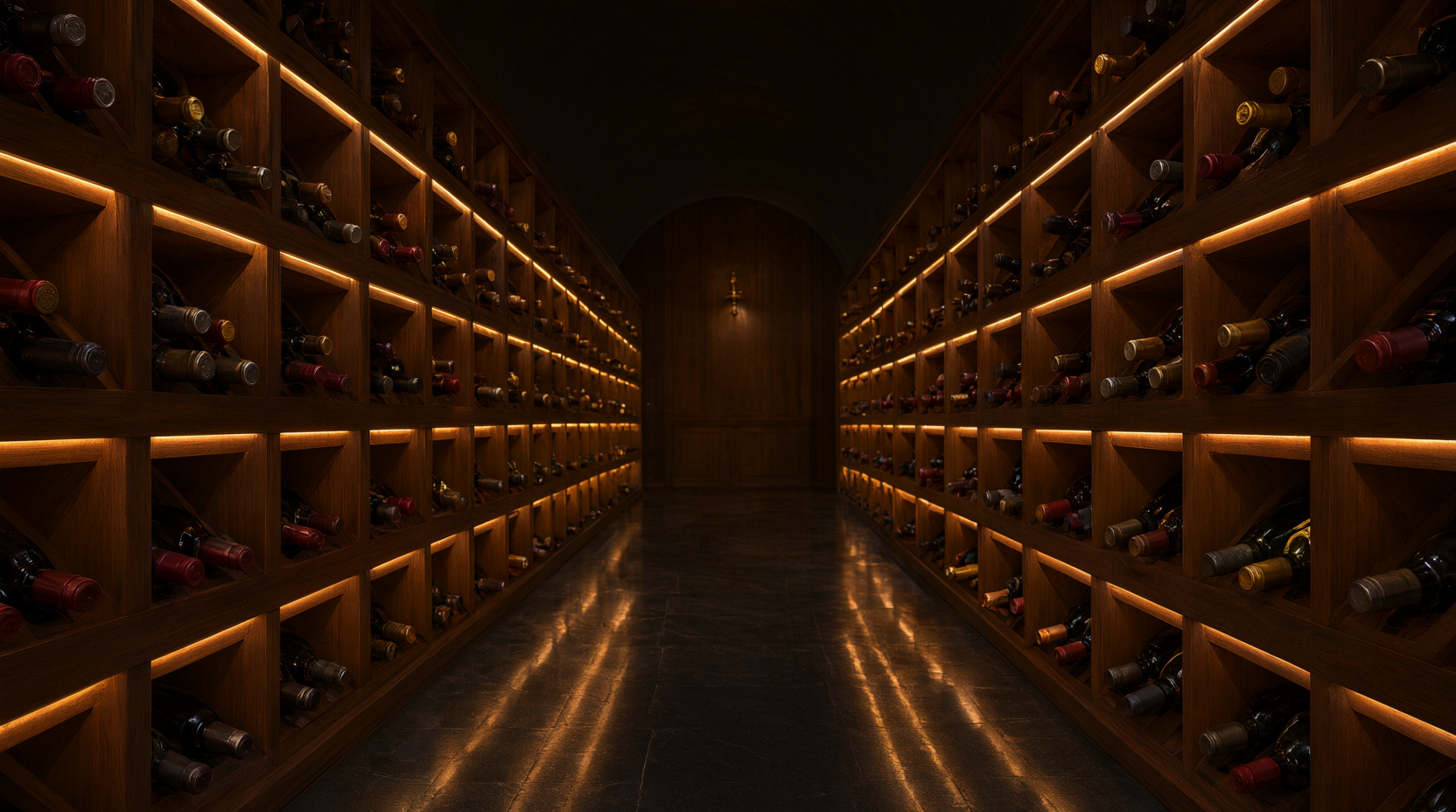
What a Wine Vault Is
A wine vault is a facility built to hold bottles at steady temperature and humidity, away from light, behind real security. For a collector with more than a few cases, the question is usually less whether a vault beats a closet or a basement and more when the collection has grown enough to justify the move.
Conditions That Protect the Wine
Aging wine depends on stability more than on any single number. A common target is 55 degrees and 70 percent humidity: cooler temperatures slow the aging process, and enough humidity keeps corks from drying out. Facilities that sell wine storage to collectors hold those readings with redundant sensors, on-site and remote monitoring, and backup generators for outages. Few home cellars have that kind of redundancy.
Light is the second quiet threat. It can break wine down early, so a well-run vault has no natural or ambient light, and its LED lighting is motion activated and gives off no heat.
Who Can Reach the Collection
In a vault, each unit is individually secured and alarmed, the building is under 24-hour video surveillance, and access is limited to current customers. The honest comparison is with a basement cellar behind an ordinary door. A collection built over years deserves a clear answer to who can reach it.
When a Collection Outgrows the House
Most collectors move to a vault for one of three reasons:
- The cellar at home is full, and the next purchase has nowhere to go
- The collection is valuable enough that conditions and security matter more than convenience
- A move, a renovation or a long trip makes home storage a risk
None of these call for a big first step. Many collectors move the bottles they are least likely to open soon and keep the rest at home until the process feels routine.
Knowing What You Own
Storage is only half of it. Cataloging in a tool such as CellarTracker records each bottle's location, value, drinkability and tasting notes, which lets you decide what to open instead of guessing. The more bottles you hold, the more that record is worth.
Comparing the Cost
The fair comparison is not a vault against free space at home, but a vault against the cost of the conditions and security you would otherwise build yourself. Reading published per-case pricing next to a quote for a cooling unit, sensors and an alarm system is the quickest way to see where your own collection sits.